How I Learned to Love Less: Building Capsule Wardrobes
“Shopping is my cardio.”
-Carrie Bradshaw-
In the early aughts, when I was in my late teens and early twenties—in typical millennial-girl aesthetic—Sex and the City became my entire personality, and I lived by this Carrie Bradshaw quote. Shopping, for me, was a combination of cardio and therapy. Whenever I was feeling restless, anxious, bored, or lonely—which was often in those early days after I moved back to Omaha and didn’t know anyone—I’d grab my slouchy hobo bag and head for the mall. If all I did was walk a few laps and window shop, taking in the recent trend arrivals, and noting the pieces I wanted but would wait for a sale, I considered it time well spent. Usually, those trips included a stop at Barnes & Noble to flip through stacks of Vogue and InStyle magazines, which fed and fueled my passion for fashion. This was, in it’s own way, my Omaha version of Carrie’s— albeit, unhealthy—sentiment:
“When I first moved to New York and I was totally broke, sometimes I would buy Vogue instead of dinner. I felt it fed me more."
When I bought my first home in 2009, a darling little 2-bedroom bungalow, I quickly converted the second bedroom into a walk-in closet—à la Carrie Bradshaw’s brownstone studio— drilling rods and adding shelves to the crumbling plaster walls. My motto was most definitely her’s: “I liked my money where I can see it . . . hanging in my closet”. And when I ran out of hanging space, I bought a 5-tier wire shelving rack and configured it to hold the excess hangers, shoes, purses and accessories.
Yet as my twenties began to fade and thirty crept ever closer, something shifted. Shopping began to lose its allure and started to feel more like a never-ending chore. Although my walls were overflowing with clothes, I found myself reaching for the same few pieces over and over again. And then one day, while haphazardly pinning away on Pinterest, I came across a pin for The 5-Piece French Wardrobe.
The philosophy of a 5-Piece French Wardrobe is to focus on building a wardrobe of high-quality, neutral basics, then adding only five new "non-basic" or statement pieces per season (spring/summer and fall/winter). It encourages investing in quality, reducing impulse buying, and instead, creates a more versatile, curated wardrobe that can be easily mixed and matched with any number of the other pieces.
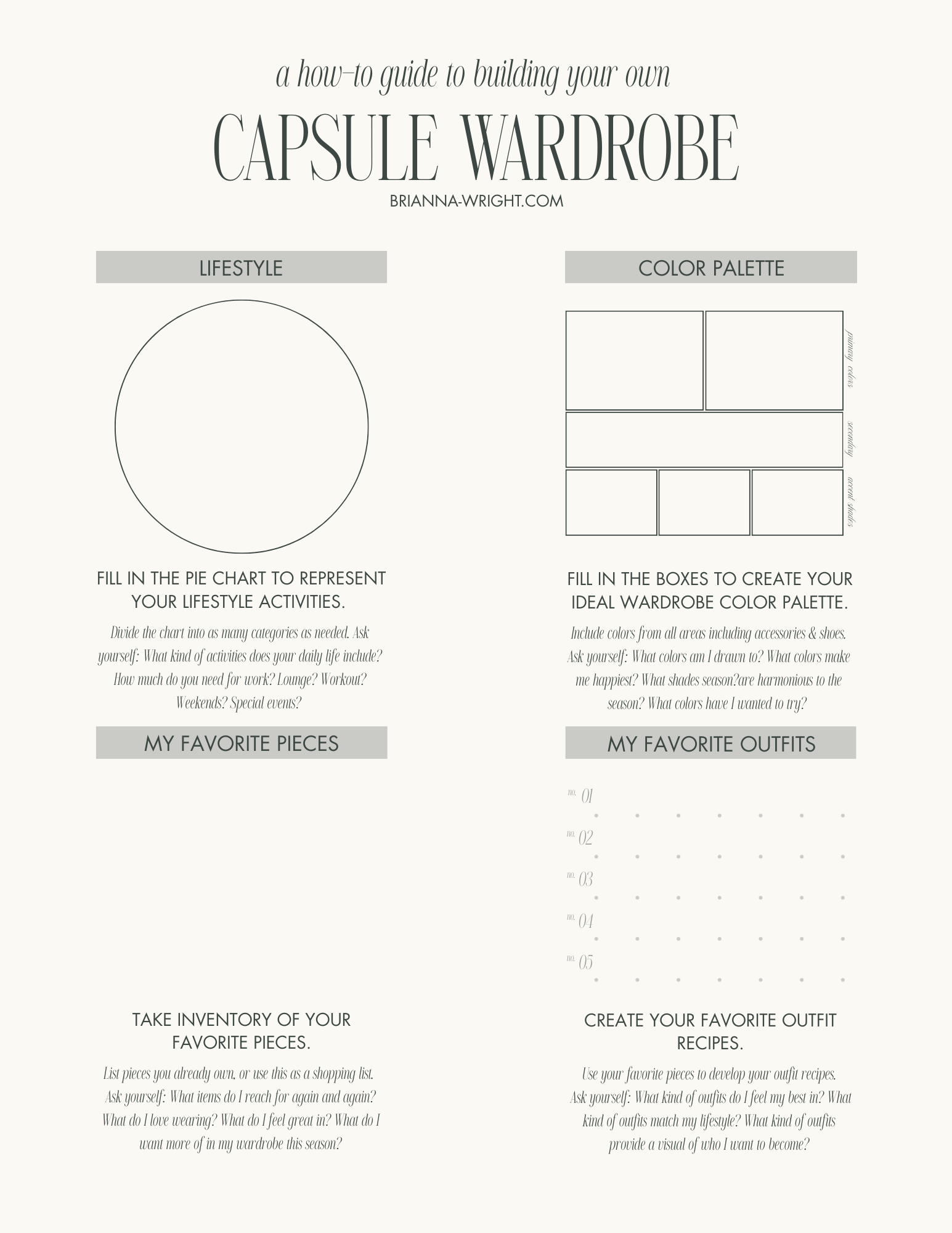
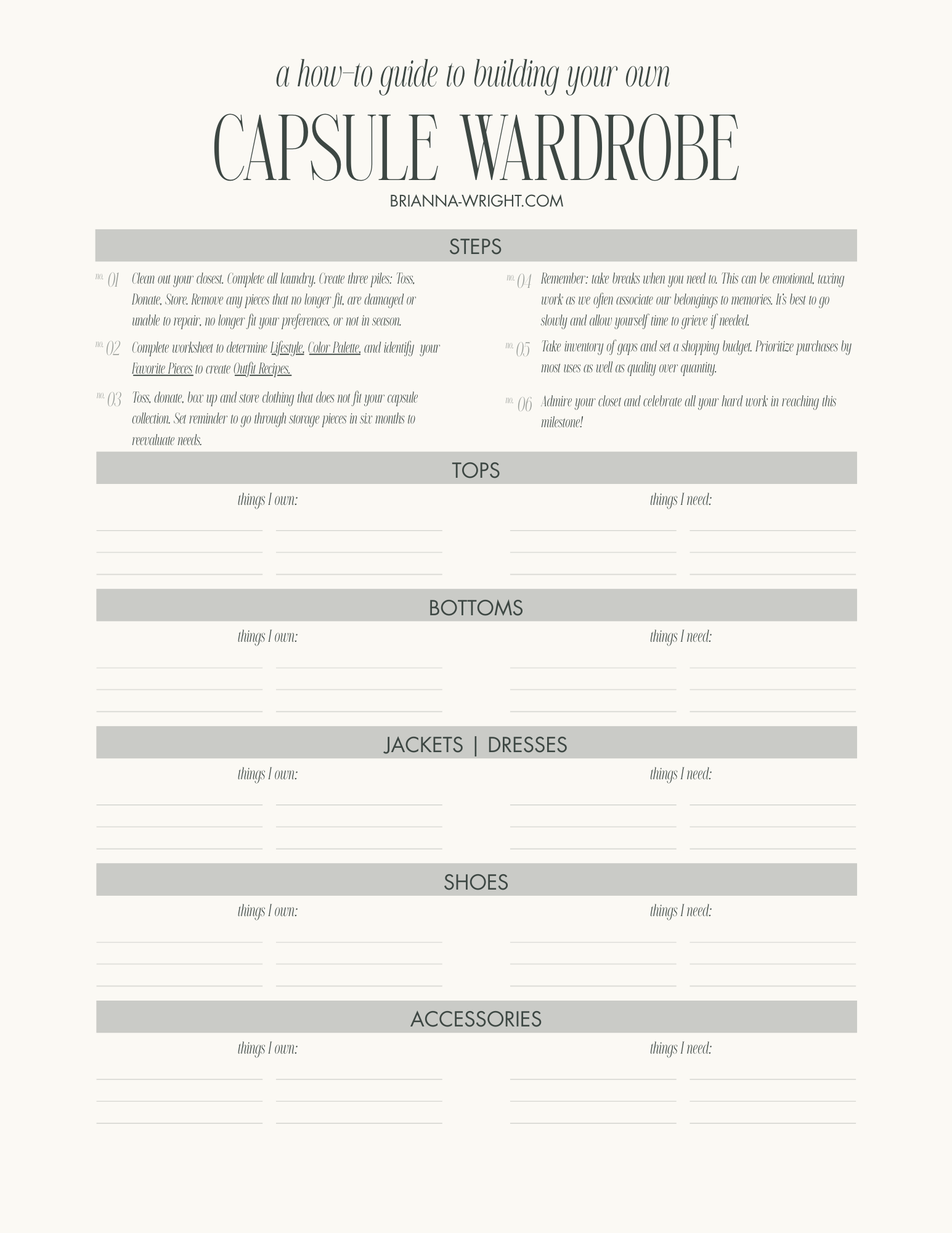
In January of 2015, as part of my New Year resolutions, I spent a weekend and identified the pieces I wanted to keep as part of my 5-Piece French Wardrobe. I created a short shopping list to fill holes, purged my wardrobe, and packed away those "sentimental” pieces I wasn’t sure I could part with and placed them into storage in my basement. With an “out of sight, out of mind” mentality, I marked my calendar to revisit the totes again in six months to see what I would be willing to part with, and planned to repeat the process until all that remained were the few pieces hanging in my everyday closet.
I documented my journey on an older version on this site, and in May of 2015 I was interviewed by the Omaha World Herald for an article titled, “Capping the Closet” which discussed the pros and cons of developing a capsule wardrobe:
“She started with a French-themed capsule that fits a neutral color scheme, with black, white, cream, navy and gray throughout. From there, she adds in seasonal, accent or refresher pieces every three months. She writes about her experience on her blog, briannaudreywright.wordpress.com.
At first, she counted jewelry and accessories and limited them as well. Now she considers them “free” options to help transform looks. It’s one of the compromises that she made as she gradually moves away from a jam-packed closet.
Most of her remaining clothes went to Goodwill. Some seasonal or sentimental bits are stored in boxes under her bed. So far, she doesn’t miss them.
“The costs have gone down tremendously,” she said. She spent only about $75 putting together her capsule. “I haven’t even felt the urge to go shopping. When I go out in stores, it’s easier to distinguish — I don’t need that, even if it’s on sale.”
Friends ask her if the limited closet means that she has to do laundry more often. Not really, she said. Most days, she wears T-shirts and camisoles under blouses and other tops, giving them a few extra days before heading to the hamper. Pants, especially jeans, have a few days or a week in them.
What the article didn’t ask at the time, and I didn’t have the words for until much later, was that there were bigger reasons at play for choosing to downsize my wardrobe:
I was slowly beginning to recognize that I was using shopping as a mask for uncomfortable feelings and instead, I needed to sit with those and understand what I was avoiding.
I was beginning to feel incredible shame at the overconsumption of capitalism. I started asking myself: Did I really need to buy Old Navy plastic flip flops in every color of the rainbow just because they were 2 for $5? I knew that there had to be a different path forward.
Similarly, I was beginning to question where my personal taste ended and trend saturation began. I began asking myself: who was setting and driving the trend? Who did it benefit by promoting clothing and body standards that were unattainable? This feeling went deeper, when, in 2016-2017, in my post-election outrage and fury, I took a magnifying lens to my spending habits, researching companies to see who owned what (quickly learning that monopolies were alive and well in the 21st century), who had donated to political campaigns and I made the conscious effort to bring my spending into better alignment with my beliefs, prioritizing companies that stood for sustainability, human rights and ethical practices.
I prided myself on the fact that, compared to my peers, I was living relatively debt-free—aside from a mortgage and car payment—however, I had next to nothing saved. When I started doing the math and totaling up the cost of my wardrobe every two weeks, regardless of whether I needed something new to replace something worn, I was shocked and honestly, disgusted at the amount of money and time I had spent over the years on clothing that, even when cared for properly, usually only lasted about ten wears before giving out.
I was overwhelmed by the sheer volume of pieces in my small bedroom-converted closet. Even though I had plenty of pieces that meant I could probably go a month or two without ever needing to do laundry, most mornings I stood in my closet and struggled to find anything to wear. There were clothes that I wore once, laundered and never wore again because they shrunk, lost their shape, pilled or no longer draped as they once had. There were pieces in colors that didn’t suit me. It was, simultaneously, too much and never enough. I was craving clarity, simplicity, and that’s what the capsule provided.
Now, over ten years later, capsule wardrobes have become second nature to me. So much so, that I’ve begun building capsules for different areas of my wardrobe like intimates, loungewear, and workout wear alongside my everyday capsule. I’ve also begun building capsules for things like cleaning supplies, bath & beauty products, nail polish, as well as household textiles. For me, quality is always better than quantity. I’d much rather have two-to-four crisp fitted sheets or nice, fluffy, hotel-like linens in my bathroom than a linen-closest that’s stuffed full of assorted towels in all shapes, sizes, colors and conditions. I buy enough for my household and I only buy new when something needs replaced.
Although I no longer adhere strictly to The 5-Piece French Wardrobe, my capsules are still based in European lines, with simplistic, minimal styles and colors that stand the test of time. These days, Poshmark is my first-stop when shopping for pieces. I love the usability it provides by allowing me to use keyword searches for specific items, browse my favorite brands, “heart” and save pieces for later review for those ones I admire but aren’t quite sure they’re the best fit. Best of all, it’s prolonging the life of vintage and gently-used pieces rather than sending them to an overflowing landfill of textile waste.